
Distinguished Service Awards

Distinguished Service Awards

The IASLC Distinguished Service Awards recognize the "luminaries" in the field of lung and thoracic cancers- those who are further along in their careers and are more high-level in their field of work- for their outstanding contributions to the field and the IASLC.

On behalf of the IASLC Board of Directors, we thank you for your nominations for these important awards.


Paul A. Bunn, Jr. Scientific Award

The Paul A. Bunn, Jr. Scientific Award recognizes an IASLC scientist for a lifetime achievement of scientific contributions to thoracic cancer research. Dr. Paul Bunn’s studies set worldwide standards for the treatment of lung cancer and identified issues of natural history and biomarkers of prognosis and therapy selection. Robert Ginsberg, MD, a thoracic surgeon from Toronto, Canada, earned the first award in 1994 for his contributions to the surgical treatment of early stage lung cancer. Initially named the Scientific Award, the IASLC renamed the award in honor of Dr. Bunn after he served as its executive director and CEO for 10 years.

2026 Award recipient

D. Ross Camidge

Director of Thoracic Oncology, University of Colorado
United States

Dr. Camidge is the Director of Thoracic Oncology at the University of Colorado. The discoveries he and his team have made, particularly in targeted therapies, have changed the standard of care for the treatment of lung cancer multiple times. He has authored over 400 academic publications, including in the Journal of Thoracic Oncology, Lancet Oncology, and New England Journal of Medicine. He has received numerous awards, including, in 2012, the Bonnie J. Addario International Lectureship Award, for which he was credited as a ‘Luminary in the quest to eradicate lung cancer’. In 2013, he became the first physician to receive the Hank Baskett Sr. Spirit Award, for which he was credited as being ‘one of the leading minds in lung cancer today’. In 2014, he was nationally recognized by The Quality of Life Center at Claremont University in California as an ‘Exemplary mentor in the positive development of junior colleagues in the profession’. In 2016, the Lung Cancer Foundation presented him with the Breath Away from The Cure Award, describing him as ‘Simply one of the best in treating lung cancer today’. In 2023, at the World Conference of Lung Cancer, the International Association for the Study of Lung Cancer presented him with the Daniel C. Ihde Award for Medical Oncology.

Every year since 2017, he has been internationally recognized as a Highly Cited Researcher ranked in the top 1% of all of Clinical Medicine by Clarivate Analytics Web of Science. He is the founding National Medical Director of the Academic Thoracic Oncology Medical Investigators Consortium (ATOMIC) – a collaborative network of 16 US and Canadian sites conducting trials in thoracic oncology.

Diagnosed with advanced lung cancer in 2022, he went public with his own diagnosis in September 2025 to help raise lung cancer awareness and to destigmatize the disease.

  • 2025: Solange Peters, USA
  • 2024: Julie R. Brahmer, USA
  • 2023: Suresh Ramalingam, USA
  • 2022: James Yang, Taiwan
  • 2021: David P. Carbone, USA
  • 2020: Joan Schiller, USA 
  • 2019: Charles Rudin, USA
  • 2018: Charles Swanton, UK
  • 2017: Tony Mok, Hong Kong
  • 2016: Roy Herbst, USA
  • 2015: Yi-Long Wu, China

  • 2013: David R. Gandara, USA
  • 2011: Nagahiro Saijo, Japan
  • 2009: Bruce Johnson and Thomas J. Lynch, USA
  • 2007: Frances Shepherd, Canada
  • 2005: Thierry LeChevalier, France
  • 2003: Paul van Houtte, Belgium
  • 2000: Daniel C. Ihde, USA
  • 1997: John D. Minna, USA
  • 1994: Robert Ginsberg, Canada

The Adi F. Gazdar IASLC Merit Award

THE ADI F. GAZDAR IASLC MERIT AWARD

​​​​​​In 2019, the IASLC Board of Directors unanimously voted to elevate its recognition of Dr. Adi F. Gazdar to one of its highest honors by renaming the IASLC Merit Award for Dr. Gazdar.  The Adi F. Gazdar IASLC Merit Award proudly recognizes and honors Dr. Gazdar’s lifelong dedication to lung cancer research through his pioneering work in molecular pathology.  The recipient of the annual Adi F. Gazdar IASLC Merit Award is chosen by the IASLC Executive Committee and is announced and recognized at the annual World Conference on Lung Cancer.
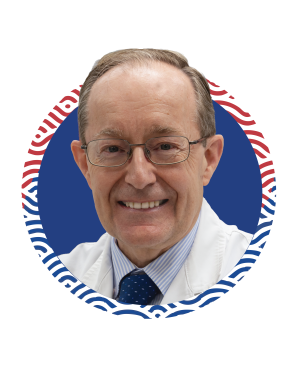
2026 Award Recipient

Luis M. Montuenga

CIMA. University of Navarra Professor of Cell Biology and Senior Researcher. CIMA. University of Navarra.
Spain

Luis M. Montuenga is a Full Professor of Cell Biology (Sciences/Medicine) and Senior Researcher at CIMA and the Cancer Center, Clínica Universidad de Navarra, Pamplona (Spain), working on basic/translational lung cancer throughout his career. He graduated in Sciences with Honors (1981) and earned his PhD (1985). He trained (1989-90) at the Royal Postgraduate Medical School (Hammersmith Hospital), London, and was a visiting researcher at NCI, Bethesda (Biomarkers and Prevention Research Branch, 1995–1998). Since 2000, he has been: Head of CIMA’s Oncology Division; Dean of the School of Sciences; and Vice-President for Research, University of Navarra; he currently heads CIMA’s LUNGSEARCH Biomarkers Lab and is PI at IdisNa and CIBER. He has published 240+ peer-reviewed papers, supervised 24 doctoral theses, and been PI on many grants (regional/national/international). Has participated in European research consortia on early lung cancer (EU-ELCG/CURELUNG/SOLACE/SPACETIME), is on the board of CIBERONC (Carlos III Health Institute), is a reviewer for national boards in ~20 countries, and is a Fellow of the European Academy of Cancer Sciences. IASLC member for 25+ years, served on the Screening & Early Detection Committee (2014–2019) and, since May 2017, on the Staging and Prognostic Factors Committee (Molecular Prognostic Factors and Molecular Subcommittee), contributing to the 9th edition TNM classification; his subcommittee membership has been renewed. He mentored three IASLC fellowship grantees (2004, 2020, 2022), now independent lung cancer researchers, and hosted an International Mentoring Award fellow (2019). Since 2011 is Associate Editor of the Journal of Thoracic Oncology and was of JTOCRR (2021-2023). He is an associate editor of four other basic/translational oncology journals. His research aims are to discover, validate, and standardize biomarkers for early detection and patient management; his work covers novel kinases, microenvironment/immune landscape, splicing alterations, spatial- and liquid-biopsy omics, and murine models, in collaboration with national/international teams in Basic Sciences, Pulmonary Medicine, Oncology, Thoracic Surgery, Radiology and Pathology. 
 

  • 2025: Pasi A. Jänne, USA
  • 2024: Kwun Fong, Australia
  • 2023: Myung-Ju Ahn, South Korea
  • 2022: Valerie Rusch, United States
  • 2021: Michael Boyer, Australia
  • 2020: Alex Adjei, USA
  • 2019: Hisao Asamura, Japan
  • 2018: Francoise Mornex, France
  • 2017: Ramon Rami-Porta, Spain
  • 2016: Keunchil Park, South Korea; Sumitra Thongprasert, Thailand
  • 2015: Harvey Pass, USA
  • 2013: James Jett, USA
  • 2011: David Ball, Australia
  • 2009: Giorgio V. Scagliotti, Italy
  • 2007: Peter Goldstraw, UK
  • 2005: Harubumi Kato, Japan
  • 2003: Paul A. Bunn Jr., USA
  • 2000: Desmond N. Carney, Ireland
  • 1997: Heine H. Hansen, Denmark
  • 1994: Norman Bleehen, UK; Yukio Shimosato, Japan
  • 1991: Clifton F. Mountain, USA

Mary J. Matthews Pathology/Translational Research Award

The Mary J. Matthews Pathology/Translational Research Award recognizes an IASLC scientist for a lifetime achievement in pathology and translational research of thoracic malignancies. Dr. Matthews served as a senior investigator and pathologist at the National Cancer Institute’s Medical Oncology Branch. She was pioneer in the foundation of the histologic subtypes of lung cancer and the relationship between those subtypes and the clinical course of lung cancer. Geno Saccommano, MD, PhD, a physician and cancer researcher who dedicated his life to developing a pioneering technique to assist in the early detection of lung cancer was the first to receive the award in 1994.

2026 Award Recipient

Wendy Cooper

Professor of Pathology, Royal Prince Alfred Hospital, NSW Health Pathology
Australia

Professor Wendy Cooper is a thoracic pathologist at Royal Prince Alfred Hospital in Sydney, Australia, a Clinical Professor at the University of Sydney, and the Anatomical Clinical Stream Lead for NSW Health Pathology. Wendy graduated in Medicine in 2008 with first-class honors and obtained Fellowship of the Royal College of Pathologists of Australasia in 2004. In 2008, she completed a PhD on Molecular markers of prognosis in early-stage NSCLC. She has been granted research funding over $16.45M and has led multiple national studies on lung cancer biomarkers including ALK, ROS-1 and PD-L1 that were pivotal in obtaining government reimbursement and implementing these tests into clinical practice.

Professor Cooper is recognized nationally and internationally as an expert pathologist with multiple leadership roles including past Chair of the Pathology Committee of IASLC, Past-President of the Asian-Australasian Pulmonary Pathology Society, and Thoracic Series Champion for the International Collaboration on Cancer Reporting. She was a co-editor and author of the 2021 WHO Classification of Thoracic Tumors, 5th edition, and is a Standing Editorial Board member for the 6th edition WHO Classification of Tumors. Professor Cooper is a member of the Australian National Lung Cancer Screening Program Expert Advisory Committee and a committee member of the WHO/IARC Handbook on Lung Cancer Screening. She is a member of the IASLC Pathology and Staging committees and chairs the Royal Australasian College of Pathologists Cancer Services Advisory Committee. She has been Deputy Editor in Chief of the journal Pathology since 2023 and is an Associate Editor of JTO-CRR.

She was awarded the Distinguished Pathologist Award from the Australasian Division of the International Academy of Pathology in 2024, IASLC Fred Hirsch Lectureship Award in 2023, Vince McGovern Memorial Award from Australasian IAP in 2019, and the Dr John Raftos Award from the National Foundation for Medical Research and Innovation in 2017.

  • 2025: Sanja Dacic, USA
  • 2024: Erik Thunnissen, Netherlands
  • 2023: Fernando Lopez-Rios, Spain
  • 2022: Rafael Rosell, Spain
  • 2021: Deepali Jain, India
  • 2020: Caroline Dive, UK
  • 2019: Andrew Nicholson, UK
  • 2018: Ignacio Wistuba, USA
  • 2017: Yasushi Yatabe, Japan
  • 2016: Keith Kerr, UK
  • 2015: Ming Tsao, Canada
  • 2013: Tetsuya Mitsudomi, Japan
  • 2011: Philip Hasleton, UK
  • 2009: Masayuki Noguchi, Japan
  • 2007: Fred R. Hirsch, USA
  • 2005: Elisabeth Brambilla, France
  • 2003: Adi Gazdar, USA
  • 2000: Yukio Shimosato, Japan
  • 1997: William D. Travis, USA
  • 1994: Gene Saccomanno, USA

Joseph W. Cullen Prevention/Early Detection Award

The Joseph W. Cullen Prevention/Early Detection Award recognizes an IASLC scientist for a lifetime achievement in the prevention of thoracic malignancies. Dr. Cullen served as the Deputy Director of the National Cancer Institute’s (NCI) Division of Cancer Prevention and Control. He created the Smoking, Tobacco and Cancer Program at the NCI in 1982. The winner of the first award in 1994 was Jesse Steinfeld, MD, the U.S. Surgeon General when the National Cancer Act of 1971 was enacted into federal law.

2026 Award Recipient

Martin Carl Tammemägi

Professor Emeritus, Brock University, Canada
Canada

Dr. Tammemägi is Professor Emeritus of Epidemiology in the Department of Health Sciences at Brock University. Dr. Tammemägi served as Scientific Lead on Ontario Health – Cancer Care Ontario’s Ontario Lung Screening Program and the previous Pilot from 2015 to 2023. He is a co-investigator on 11 active ongoing studies, mostly involving lung cancer, screening, biomarkers, and risk prediction modeling. He has been a co-investigator and remains an active analyst on multiple U.S, Canadian, and International trials. He is an associate member of the U.S. Cancer Intervention and Surveillance Modeling Network (CISNET) Lung Group and serves on the International Association for the Study of Lung Cancer (IASLC) Early Detection and Screening Working Group. He has developed several widely validated and adopted lung cancer risk prediction models (e.g., PLCOm2012) and pulmonary nodule malignancy probability models (e.g., PanCan or Brock). Dr. Tammemägi is involved in several studies of cancer screening disparities and finding more effective ways to screen women, Blacks in the U.S., and Indigenous peoples in Canada, the U.S, New Zealand, and Australia. Tammemägi was co-lead on the Lung Cancer Screening Program Quality Indicators-Review and Recommendations: An International Association for the Study of Lung Cancer’s (IASLC) Delphi Process Study, which was published in the Journal of Thoracic Oncology in 2025. Professor Tammemägi is co-lead on the IASLC’s Feasible Approaches for Lung Cancer Screening of People Who Never Smoked – the FALCONS Study. Professor Tammemägi is currently active in developing updated lung cancer risk prediction models that include additional predictors, such as environmental and occupational exposures, and that predict lung cancer in those who never smoked and in special populations, such as individuals with HIV/AIDS.

  • 2025: Witold Rzyman, Poland
  • 2024: Claudia Henschke, USA
  • 2023: William Evans, Canada
  • 2022: Edward F. Patz Jr., United States
  • 2021: Gabriella Sozzi, Italy
  • 2020 Pan-Chyr Yang, Taiwan
  • 2019: Denise Aberle, USA
  • 2018: Nise Yamaguchi, Brazil; Fadlo Khuri, Lebanon
  • 2017: Carolyn Dresler, USA
  • 2016: Ugo Pastorino, Italy
  • 2015: Jacek Jassem, Poland
  • 2013: Pieter Postmus, Netherlands
  • 2011: John Field, UK
  • 2009: Stephen Lam, Canada
  • 2007: James Mulshine, USA
  • 2005: Nigel Gray, Australia
  • 1997: Clifford Douglas, USA
  • 1994: Jesse Steinfeld, USA

Interested in Submitting a Nomination?

Nominations for the 2026 Distinguished Service Awards are now closed. If you have someone in mind that you'd like to nominate for the 2027 Distinguished Service Awards, let us know! Fill out the form below to receive a reminder when the 2027 nomination period opens.